
Skip This Checklist and You're Betting on a Stuck Door at the Worst Time
Every homeowner on the Treasure Coast finishes hurricane season with a garage door that's been through months of salt air, humidity swings, and sudden downpours, even if no storm ever made direct landfall nearby. Ignore the aftermath and you're not just risking a squeaky hinge. You're risking a spring that's been quietly rusting since July snapping without warning, a track that's swollen just enough to bind, or an opener that struggles the first cold, dry morning it has to work harder than it has in weeks. None of that shows up as an emergency until it is one, usually when you're trying to leave for work or get a car out before a delivery. A 20-minute inspection now is a lot cheaper than an emergency call later.
What Months of Humidity and Salt Air Actually Do to Your Door
Coastal humidity doesn't just make things feel sticky. It gets into metal hardware and starts corrosion that's easy to miss until it's advanced. Wood and composite doors absorb moisture and swell slightly, which can throw off alignment in the tracks. Afternoon downpours all summer mean water has likely splashed against the bottom panel and weatherstripping repeatedly, and that seal has been doing double duty keeping water out during storms. As the weather shifts toward the drier, cooler months, it's worth checking for damage while it's still fresh enough to catch early.
Inspect Springs and Hardware for Rust
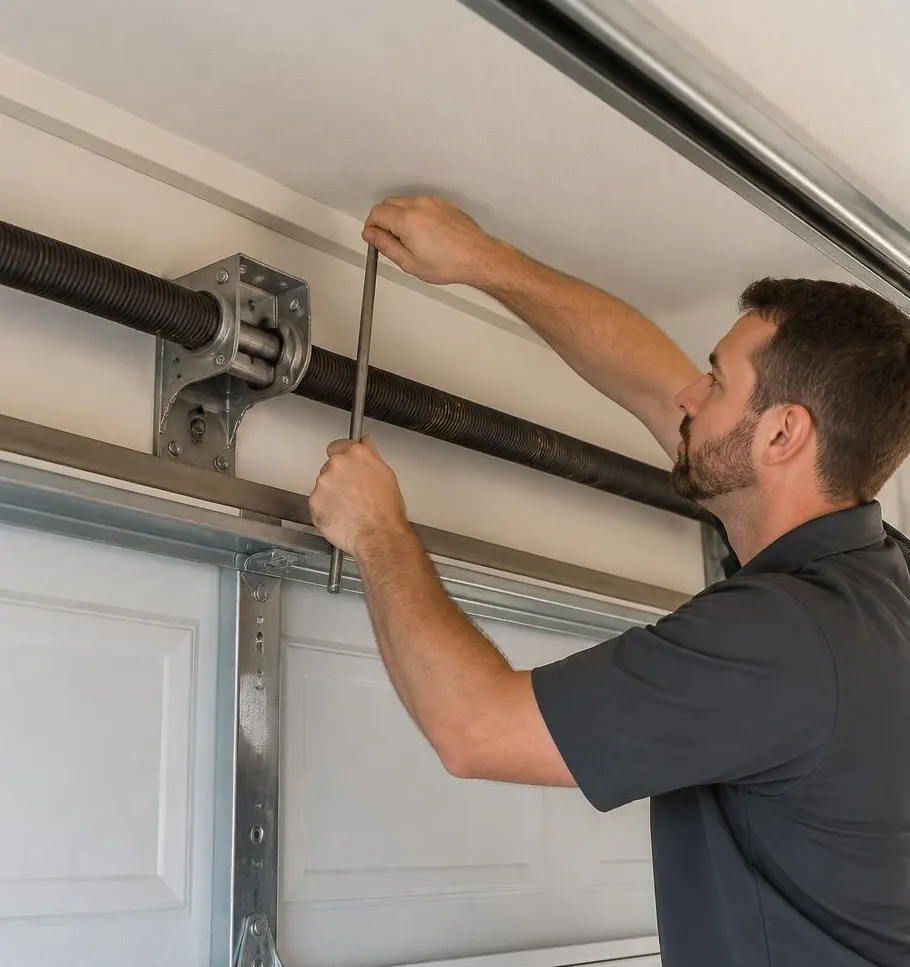
Torsion and extension springs take on a lot of stress, and rust weakens metal from the inside before it's visible on the surface. Look for flaking, discoloration, or pitting on the springs, the cables, and the mounting hardware. If you see rust forming, don't wait for a full seasonal maintenance visit. A corroded spring under tension is one of the more dangerous failures a garage door can have, and it tends to go without warning rather than gradually.
Check Weatherstripping and Bottom Seals
After a summer of heavy rain, the rubber seal along the bottom of the door and the weatherstripping around the frame may be cracked, flattened, or pulled loose. Run your hand along it. If it feels stiff, brittle, or has visible gaps, water and small pests have probably already been getting through. Replacing seals now, before the drier season sets in, keeps moisture from continuing to work its way into the door's bottom panel and hardware.
Lubricate Everything That Moves
Hinges, rollers, and tracks that sat through a humid summer often develop a gummy buildup of dust and moisture. A dry, silicone-based lubricant (avoid household oils that attract grit) on the hinges, rollers, and springs will smooth out operation and cut down on the grinding or squealing noise that tends to show up as the weather cools and metal contracts slightly overnight.
Test the Opener and Backup Battery
If your opener has a battery backup, this is the point in the year to test it, not during the next storm. Run the door manually to check for resistance, confirm the auto-reverse safety feature still works by placing an object in the door's path, and listen for grinding in the motor. Openers that strained through a summer of humidity sometimes reveal worn gears or a failing capacitor once temperatures and humidity levels shift.
If the House Sat Empty for a While
Plenty of homes on the Treasure Coast are used seasonally, and a door that hasn't opened in weeks or months is a different risk profile than one used daily. Springs can seize slightly from disuse combined with humidity, rollers can develop flat spots, and pests sometimes find their way into gaps in unused weatherstripping. Before putting the door back into regular use, cycle it a few times manually and watch for uneven movement, jerking, or unusual sounds before relying on the opener.
When to Call Fort Pierce Garage Door
If you spot rust on springs or cables, hear new grinding or popping sounds, notice the door sitting unevenly in its tracks, or the opener hesitates or reverses unexpectedly, it's time to call in a professional rather than keep testing it yourself. Fort Pierce Garage Door handles garage door maintenance visits that cover exactly this kind of post-storm-season inspection, and our spring replacement service addresses corrosion-weakened springs before they fail under load. We check alignment, hardware condition, and opener performance as a set, since a problem in one area often points to wear in another.
If your garage door has been fighting humidity and salt air all summer, get ahead of it now. Call Fort Pierce Garage Door for a seasonal inspection anywhere from Fort Pierce to Port St. Lucie, Jensen Beach, Stuart, Vero Beach, Palm City, Tradition, or White City, and head into the cooler months with a door that works the way it should.